Important information about ankle sprains
Ankle sprain surgery is intended for people with severe ligament tears, chronic ankle instability, or high ankle sprains that do not heal with rest and physical therapy. There are a variety of methods and medical products (like those mentioned below) that can be used to treat an ankle sprain, based on a determination jointly made by a patient and a healthcare professional, in consideration of a patient’s unique clinical factors. Only a healthcare professional can help a patient determine if surgery is appropriate for them and what products may be appropriate to treat that patient’s individual condition.
FlexBand, FlexBand Plus and FlexPatch Dynamic Matrix are intended for use in ankle surgery to reinforce soft tissue where weakness exists. These products provide a degradable scaffold that is incorporated into a patient’s own tissue. FlexBand, FlexBand Plus and FlexPatch Dynamic Matrix are not intended to replace normal body structure or provide the full mechanical strength to support tendons and ligaments.
FlexBand, FlexBand Plus and FlexPatch Dynamic Matrix are not appropriate for patients with infections, decreased vascularity (reduced blood flow), pathologic soft tissue conditions that would prevent secure fixation (disease or disorder of the soft tissues of the body that may prevent the device from being appropriately anchored to the body), other medical or surgical conditions which would preclude the potential benefit of surgery, bone stock compromised by disease (bones weakened by disease), infection or prior implantation that cannot provide adequate support and/or fixation of the devices (infection or prior surgery with an implant that may prevent the device from being appropriately anchored to the body), or sensitivity to the device materials. FlexBand, FlexBand Plus and FlexPatch Dynamic Matrix should not be used in any patient with mental or neurological conditions who is unwilling or incapable of following postoperative care instructions (e.g., patients who have certain mental health conditions that may make them inappropriate candidates for surgery).
In ankle surgery, Artelon Anchor is intended for use in soft tissue fixation to bone.
Artelon Anchor is not appropriate for patients with any active infection, blood supply limitations or other systemic conditions that may hinder healing (blood conditions that impact blood flow or other conditions that may slow the healing process), foreign body sensitivity (reaction to materials not found in the body), insufficient quality or quantity of bone, bone stock compromised by disease (bones weakened by disease), infection or prior implantation that cannot provide adequate support and/or fixation of the devices (infection or prior surgery with an implant that may prevent the device from being appropriately anchored to the body), or material sensitivity- documented or suspected (an adverse reaction to the device material). Artelon Anchors are also not appropriate for patients who are unable or unwilling to follow their surgeon’s prescribed postoperative regimen (e.g., patients who have certain mental health conditions that may make them inappropriate candidates for surgery).
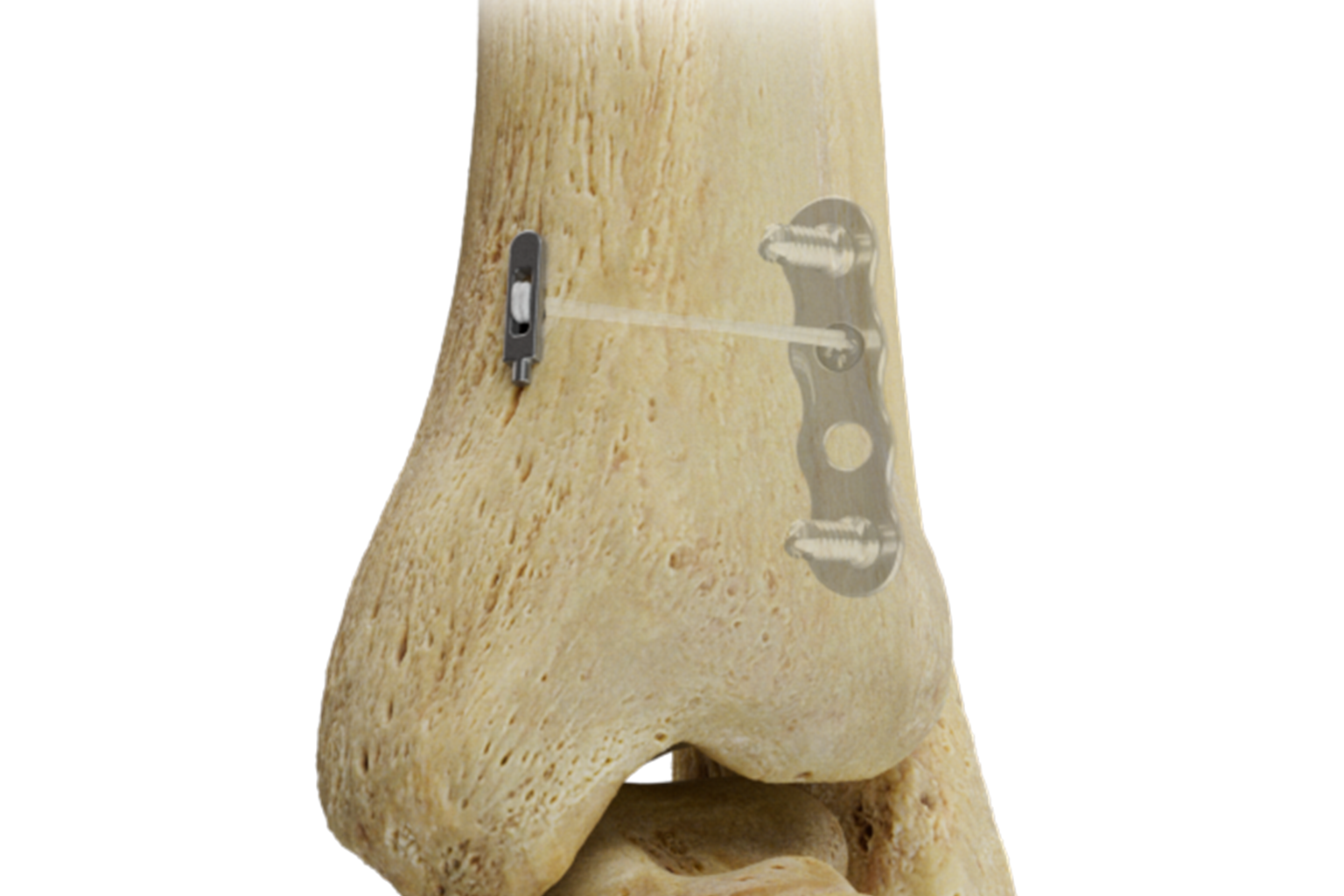
In ankle surgery, Synchfix EVT is intended for soft tissue and bone fixation for ankle syndesmosis disruptions (a tear of the ligaments above the ankle), with or without ankle fractures. This device imay be used for soft tissue and bone fixation for additional support when other hardware products like screws or plates, are used in surgery to treat an ankle fracture.
Synchfix EVT is not appropriate for patients with any active infection, compromised vascularity that would inhibit adequate blood supply to the fracture or the operative site (blood conditions that impact blood flow or other conditions that may slow the healing process), bone stock compromised by disease (bones weakened by disease), infection or prior implantation that cannot provide adequate support and / or fixation of the devices (infection or prior surgery with an implant that may prevent the device from being appropriately anchored to the body), material sensitivity- documented or suspected (an adverse reaction to the device material), patients having inadequate tissue coverage over the operative site, implant utilization that would interfere with anatomical structures or physiological performance (using the implant in a way that could affect nearby body structures or normal body function), any mental or neuromuscular disorder which would create an unacceptable risk of fixation failure or complications in postoperative care (e.g., patients who have certain mental health conditions that may make them inappropriate candidates for surgery), and/or other medical or surgical conditions which would preclude the potential benefit of surgery (as determined by the treating surgeon).
Any surgery has serious risks. The risks associated with the previously mentioned products and/or procedures include but are not limited to infection, pain, swelling, and inflammation around the implant. Certain implant-related risks which may lead to revision of the implant or additional surgeries include implant fracture (breakage), loosening, and/or dislocation (moving out of place). Additional risks include bone resorption (bone loss) or bone over-production (extra bone growth), allergic reaction to the implant materials, untoward histological responses possibly involving macrophages and/or fibroblasts (the body, including the body’s cells and tissues, may react abnormally to the implant over time), migration of particle wear debris possibly resulting in a bodily response (small pieces of the implant may wear off and migrate through the body resulting in a reaction), and embolism (blocked blood vessel). Additionally, failure of the implant could occur.
The information presented is for educational purposes only. Stryker is not dispensing medical advice. Please speak to your doctor to decide if surgery to treat your ankle sprain is appropriate for you. Only your doctor can make the medical decision about which products and treatments are right for your own individual condition. As with any surgery, surgery to treat your ankle sprain carries certain risks. Your surgeon will explain all the possible complications of the surgery, as well as side effects. Additionally, the lifetime of an implant is not infinite and varies with each individual. Also, each patient will experience a different post-operative activity level, depending on their own individual clinical factors. Your doctor will help counsel you about how to best maintain your activities to potentially prolong the lifetime of the device. It is important to closely follow your doctor's instructions regarding post-surgery activity, treatment and follow-up care.
Stryker Corporation or its other divisions or other corporate affiliated entities own, use or have applied for the following trademarks or service marks: Artelon, Stryker, Synchfix, Wright. All other trademarks are trademarks of their respective owners or holders.