Tornier

Perform™

Trust and confidence. Integration and choice. Built to perform.


Tornier Perform Humeral System - Stem

Ready to perform

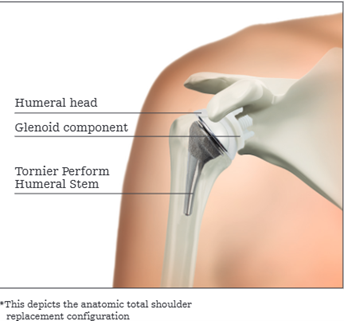
Elevated by Blueprint 3D Planning Software and the market leading1 Perform anatomic and reverse glenoid, the Tornier Perform Humeral Stem offers a multitude of solutions for primary shoulder arthroplasty cases.2 The Tornier Perform Humeral System – Stem is a shoulder implant that can be used in anatomic, reverse, and hemi-arthroplasty of the shoulder. During shoulder replacement surgery, the ball (humeral head) and socket (glenoid) and replaced with implants.3
Tornier Perform Humeral System - Stemless

Perform Humeral continues with stemless

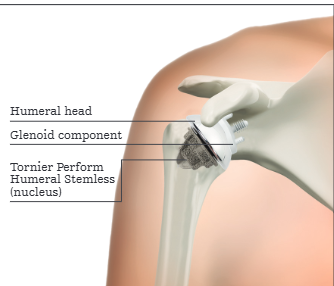
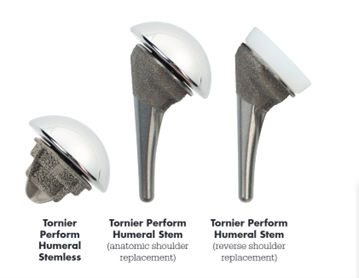
For primary anatomic total shoulder arthroplasty, and for patients with good bone quality, Tornier Perform Humeral Stemless is engineered to perform. Perform Stemless offers centered and offset head options to provide your surgeon with more options to recreate patient anatomy.4 Tornier Perform Humeral System – Stemless is a shoulder implant featuring a “nucleus” and a humeral head as shown in the image on the right. As you can see from the images, the Stemless device is shorter than the stem. Your surgeon will decide if one of these devices could work for you.5
Ask your surgeon if a Tornier Perform Humeral System implant is right for you.

A Tornier Perform Humeral System shoulder replacement may be right for you if:

• You have osteoarthritis or arthritis resulting from an injury (post-traumatic arthritis)

• You have severe or disabling shoulder pain due to arthritis

• Treatments, such as steroid injections or physical therapy have not helped with your shoulder pain and movement.

Only your surgeon can tell you whether Tornier Perform Humeral System is right for you. Talk to your surgeon about the potential benefits and risks of the Tornier Perform Humeral System.

Tornier Perform Humeral System - Fracture

Do more for fractures

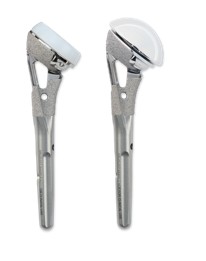
A shoulder fracture can make even simple daily activities painful and difficult. The Tornier Perform Humeral System– Fracture is a shoulder replacement implant designed to help restore stability and support healing after certain types of upper arm (humerus) fractures.

Only your surgeon can determine if the Tornier Perform Humeral system – Fracture is right for you. Be sure to discuss the potential benefits and risks, as well as all available treatment options, with your doctor.6

References:
  1. Stryker data on file
  2. Tornier Perform Stem and Stemless brochure https://view.stryker.com/viewer/0b79a3505ed57dc6cae6c6b53d06e591
  3. Tornier Perform Stem and Stemless brochure https://view.stryker.com/viewer/1eee37d94d835b16a77ed191becd0dae
  4. Tornier Perform Stem and Stemless brochure https://view.stryker.com/viewer/1eee37d94d835b16a77ed191becd0dae
  5. Tornier Perform Stem and Stemless brochure https://view.stryker.com/viewer/1eee37d94d835b16a77ed191becd0dae
  6. Stryker data on file

IMPORTANT INFORMATION ABOUT SHOULDER REPLACEMENT

Shoulder Surgery

Reverse total shoulder joint replacement is intended for use in individuals with a functional deltoid muscle, grossly deficient rotator cuff, and pain disabled by one or more of the following: non-inflammatory degenerative joint disease (i.e. osteoarthritis) and avascular necrosis; pseudoparalysis or anterior superior escape; rotator cuff tear; correction of functional deformity; post-traumatic arthritis; revisions or fractures of the humeral head where adequate fixation can be achieved and adequate bone stock remains.

Shoulder joint replacement surgery is not appropriate for patients with certain types of infections, any mental or neuromuscular disorder which would create an unacceptable risk of device stability, device fixation failure or complications in postoperative care. Additionally, shoulder joint replacement surgery is not appropriate for patients whose anticipated activities would impose high levels of stress on the shoulder.

Like any surgery, shoulder replacement surgery has potential risks. Some may occur during surgery, such as bleeding, bone fracture, injury to nearby blood vessels or nerves, or other surgical or anesthesia-related complications. Other risks may occur during or after surgery and can include pain or stiffness, infection, blood clots, changes in blood pressure or heart rhythm, lung problems such as pneumonia or emboli, stroke or heart attack, and death. Implant related risks which may lead to a revision or removal of the implant include dislocation of the implant, loosening or wear of the implant, bone fracture, nerve damage, heterotopic bone formation (abnormal bone growth in tissue), wear or breakage of the implant, metal and/or foreign body sensitivity, soft tissue imbalance, osteolysis (localized progressive bone loss), audible sounds during motion, and reaction to particle debris. Being overweight, manual labor activities, some sports activities, patient age, activity level, certain medical conditions, alcohol or drug addiction, and mental disorders may be associated with increased risks.

Shoulder joint implants may not provide the same feel or performance characteristics experienced with a normal healthy joint. The information presented is for educational purposes only. Stryker is not dispensing medical advice. Please speak to your doctor to decide if shoulder joint replacement surgery is appropriate for you. Only your doctor can make the medical decision about which products and treatments are right for your own individual condition.

As with any surgery, joint replacement carries certain risks. Your surgeon will explain all the possible complications of the surgery, as well as side effects. Additionally, the lifetime of a joint replacement is not infinite and varies with each individual. Also, each patient will experience a different post-operative activity level, depending on their own individual clinical factors. Your doctor will help counsel you about how to best maintain your activities to potentially prolong the lifetime of the device. It is important to closely follow your doctor's instructions regarding post-surgery activity, treatment and follow-up care.

Stryker Corporation or its other divisions or other corporate affiliated entities own, use or have applied for the following trademarks or service marks: Mako, AccuStop, Stryker. All other trademarks are trademarks of their respective owners or holders.


Please upgrade your internet browser.

Our website was designed for a range of browsers. However, if you would like to use many of our latest and greatest features, please upgrade to a modern, fully supported browser.

Find the latest versions of modern supported browsers »

Note: If you are browsing in Internet Explorer 9 or later, and you are still seeing this message, you may be in Compatability Mode. Look for the Compability View icon in your Address bar, or the Compatability View and Compatability View settings from the Tools Menu in your Internet Explorer toolbar (hit the ALT key if your menu bar is hidden). If you are on an Intranet, you may need to contact your IT Support about Compatability View settings and whitelists.